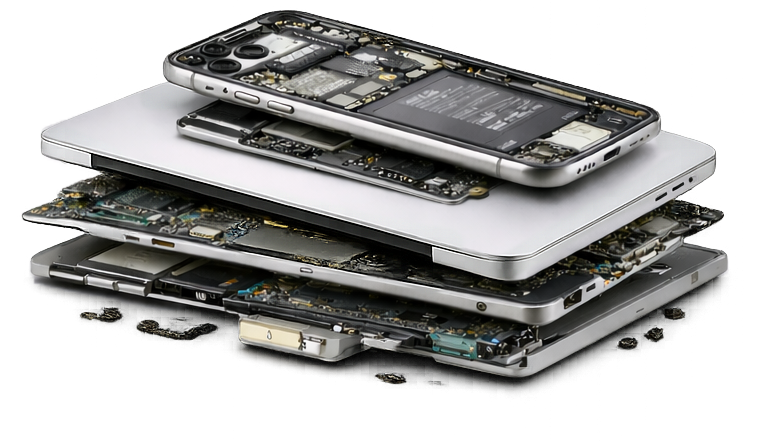
Every year, organizations worldwide retire millions of laptops, servers, smartphones, networking devices, storage arrays, and other IT assets. Most businesses refresh technology infrastructure every three to five years, yet many still lack a secure, compliant, and environmentally responsible strategy for managing retired equipment.
That’s where IT Asset Disposition (ITAD) and broader Technology Lifecycle Solutions come into play.
Today, forward-thinking organizations no longer view retired technology as waste. Instead, they recognize end-of-life IT as a critical component of cybersecurity, compliance, sustainability, operational efficiency, and ESG performance. A properly managed technology lifecycle program helps organizations protect sensitive data, recover residual asset value, reduce environmental impact, and support long-term corporate sustainability objectives.
In this guide, we’ll explain:
ITAD stands for IT Asset Disposition. It refers to the secure, documented, and environmentally responsible process of retiring obsolete or unwanted IT equipment.
ITAD encompasses far more than simply recycling electronics. A professional ITAD program includes:
Modern ITAD programs now form the operational foundation of broader Technology Lifecycle Solutions strategies. Rather than focusing solely on disposal, organizations are increasingly adopting end-to-end lifecycle management approaches that maximize security, compliance, operational visibility, and sustainability outcomes across the full lifespan of their technology assets.
In other words:
ITAD manages the end of a device’s life.
Technology Lifecycle Solutions optimize the entire journey.
An enterprise ITAD program typically includes:
For larger organizations, ITAD programs often span multiple offices, warehouses, retail locations, healthcare facilities, or data centers across different countries and jurisdictions.
Retired devices frequently contain highly sensitive information, including:
Simply deleting files or formatting a drive does not permanently erase data. Industry audits have repeatedly demonstrated that improperly sanitized secondhand devices can still contain recoverable information.
Without a certified disposition process, organizations expose themselves to:
Under regulations and frameworks such as:
organizations remain responsible for protecting sensitive data throughout the full lifecycle of a device, including at end-of-life.
Many industries operate under strict requirements governing the handling and destruction of data-bearing devices.
A qualified ITAD provider helps organizations maintain compliance by providing:
This documentation becomes critical during internal audits, cybersecurity assessments, vendor risk reviews, and regulatory investigations.
Electronic waste is one of the fastest-growing waste streams globally. Improper disposal of electronics can release hazardous materials such as:
Responsible ITAD programs prioritize:
For many organizations, ITAD now plays an important role within broader ESG initiatives and Scope 3 emissions reduction strategies.
Investors, customers, procurement teams, and regulators increasingly expect organizations to demonstrate measurable environmental stewardship throughout their supply chain and technology infrastructure.
Retired IT equipment often still retains market value.
Laptops, servers, networking equipment, and mobile devices that meet refurbishment criteria can frequently be:
A properly managed remarketing program can significantly offset disposition costs while extending the useful life of technology assets within the circular economy.
A professional ITAD engagement typically follows several key stages.
Equipment is securely collected from your facility or shipped through a managed reverse logistics program. Chain-of-custody documentation begins immediately at pickup.
For enterprise organizations, this may involve:
Each device is cataloged and reconciled against internal asset records.
This typically includes:
Comprehensive inventory reconciliation ensures complete visibility and accountability throughout the process.
Data-bearing devices are sanitized according to recognized industry standards such as:
Depending on the device type and client requirements, sanitization may include:
A certificate of data destruction is issued upon completion.
Devices suitable for reuse are:
This approach supports both value recovery and sustainability objectives by extending product lifespan and reducing unnecessary manufacturing demand.
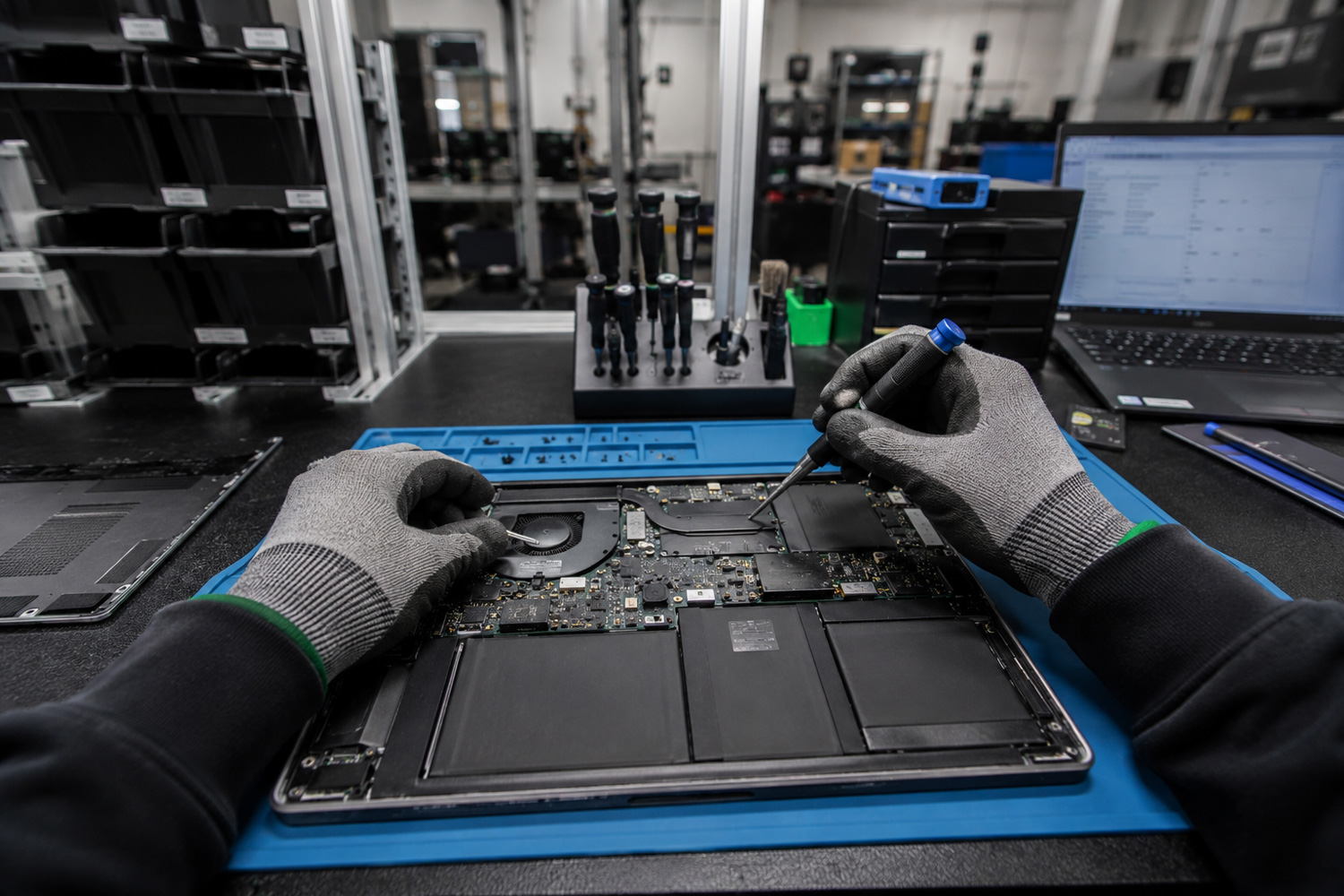
Equipment that cannot be reused is dismantled and processed through certified recycling streams.
Responsible recycling ensures:
Clients receive detailed reporting that may include:
Enterprise-grade reporting is essential for audits, internal governance, sustainability reporting, and vendor compliance programs.
Not all ITAD providers operate to the same standards. Organizations should evaluate providers based on certifications, operational controls, and downstream accountability.
Key certifications include:
The leading global certification standard for electronics reuse and recycling. R2-certified facilities must meet strict requirements related to:
The international standard for information security management systems (ISMS). Demonstrates robust controls for protecting sensitive information.
Verifies a certified environmental management system.
Covers occupational health and safety management systems.
Demonstrates quality management and operational consistency.
Indicates adherence to recognized secure destruction and information handling practices.
Beyond certifications, organizations should also assess:
Responsible ITAD programs can contribute meaningfully to corporate sustainability initiatives.
When electronics are reused or responsibly recycled instead of landfilled, organizations can help reduce:
Depending on the methodology and jurisdiction, these environmental benefits may also support:
Organizations pursuing net-zero commitments and ESG objectives increasingly incorporate IT lifecycle management into their broader sustainability strategy.
Managing retired IT assets across multiple countries introduces additional complexity.
Organizations must navigate:
Examples include:
A global ITAD provider with international operational capabilities helps ensure consistent standards across all regions while minimizing compliance gaps and operational risk.
ERS International is a globally certified provider of IT Asset Disposition and Technology Lifecycle Solutions with operational capabilities across North America, South America, Europe, and the Middle East.
Founded in 2003, ERS International helps organizations securely manage retired technology assets through a combination of:
ERS International operates certified processing facilities and global consolidation capabilities designed to support enterprise-scale disposition programs across multiple jurisdictions.
Our certifications and operational standards include:
ERS International works with:
Our approach prioritizes:
Whether supporting a one-time decommissioning project or a long-term lifecycle management strategy, ERS International provides organizations with the infrastructure, operational oversight, and global reach required to manage technology assets securely and responsibly.
Whether you’re managing a one-time technology refresh, data center decommissioning project, or an enterprise-wide IT lifecycle program, ERS International provides secure, certified, and globally scalable IT Asset Disposition solutions.
Electronics recycling focuses primarily on material recovery and environmental disposal. ITAD is a broader enterprise process that includes secure data destruction, asset tracking, compliance reporting, remarketing, and chain-of-custody management.
Timelines depend on project size, logistics complexity, and reporting requirements. Most enterprise ITAD engagements are completed within two to four weeks, while larger multi-site programs may operate on ongoing service schedules.
Data-bearing devices are sanitized using recognized industry standards such as NIST 800-88. Depending on security requirements, devices may undergo overwriting, degaussing, or physical destruction before reuse or recycling.
Yes. Functional or refurbishable devices may retain residual market value. Proper testing, grading, and remarketing can help offset disposition costs while supporting circular economy initiatives.
Professional ITAD providers supply detailed reporting that may include:
These reports help organizations demonstrate compliance during audits and regulatory reviews.